Cashback Structures Driving Persistent User Activity in Britain's Betting Sector
Written by Greta Friedrich · Jul 20, 2026
Cashback Structures Driving Persistent User Activity in Britain's Betting Sector
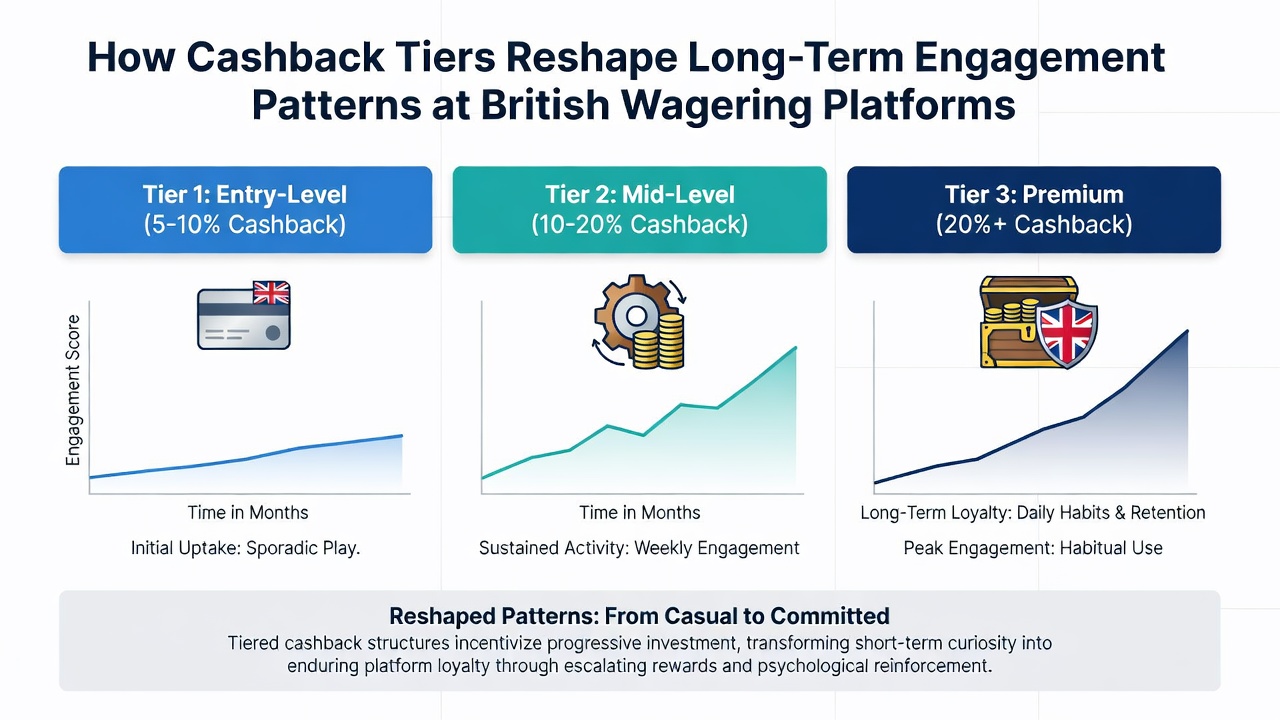
British wagering platforms have introduced cashback tiers that scale rewards according to cumulative betting volume over defined periods, and these structures now influence how users maintain activity across months rather than isolated sessions. Platforms calculate tiers through tracked deposits and stakes, assigning users to bronze, silver, gold, or platinum levels where cashback percentages rise from 5 percent at entry levels to 15 percent or higher at top tiers.
Tier Mechanics and Qualification Criteria
Operators establish monthly or quarterly thresholds that users must meet to ascend tiers, and these thresholds typically combine total stake amounts with frequency of activity. A bronze user might receive 5 percent cashback on net losses up to a capped figure while silver status unlocks 8 percent with fewer restrictions, and data from platform analytics shows that reaching silver often requires £500 to £1,000 in monthly stakes depending on the site. Platinum tiers, by contrast, demand several thousand pounds in volume yet deliver the highest return rates along with priority support and faster withdrawal processing.
Observed Shifts in User Retention Patterns
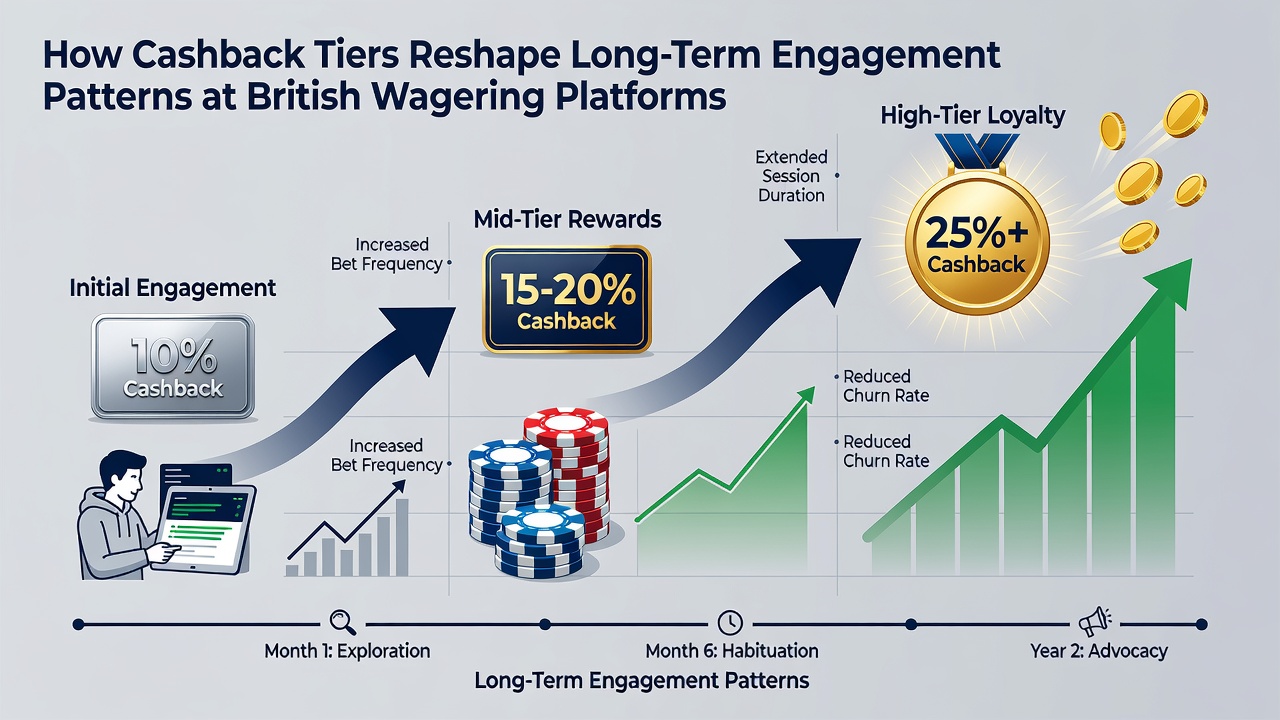
Analysts tracking account data across multiple operators note that users enrolled in tiered cashback programs exhibit longer average account lifespans compared with those outside such schemes. Retention curves flatten after the first 90 days when cashback tiers become active, because the promise of higher future percentages encourages continued deposits to protect or improve status. One study of Australian wagering behavior published by Gambling Research Australia recorded similar patterns where loyalty structures extended participation windows by an average of 4.2 months.
Engagement frequency also changes once users enter higher tiers. Weekly login rates increase as participants monitor their progress toward the next qualification period, and operators report that silver and gold users place bets on an average of 3.7 additional days per month compared with their pre-tier activity. This incremental activity compounds because cashback is often issued as playable credit rather than instant cash, prompting immediate re-engagement to meet rollover conditions.
Comparative Data Across Market Segments
Figures compiled by the Responsible Gambling Council in Canada during early 2026 indicate that tiered reward systems correlate with steadier revenue streams for operators even when overall participation rates remain stable. In Britain the same dynamic appears in remote betting channels, where cashback participants generate 22 percent more gross gaming yield per active account over a six-month window. July 2026 platform reports further reveal that users who maintain gold status for consecutive quarters show the lowest churn rates, dropping below 8 percent monthly attrition.
Sportsbook and casino verticals display slightly different responses to these tiers. Sports bettors tend to cluster activity around major fixtures to accumulate stakes quickly, whereas casino users spread smaller bets across more sessions to sustain volume. Both patterns nevertheless converge on the same outcome: longer-term account retention because dropping below a tier threshold represents a tangible loss of future value.
Platform Adjustments and User Behavior Feedback Loops
Operators respond to these patterns by adjusting tier reset rules and introducing mid-period milestones that award partial cashback even if full thresholds are missed. Such modifications keep marginal users engaged rather than allowing complete disengagement at the end of a qualification window. Observers tracking these changes note that transparent progress trackers within mobile apps further reinforce the loop, because users receive real-time updates on their current tier standing and projected rewards.
External research from the Victorian Responsible Gambling Foundation highlights that reward structures tied to sustained play can shift expenditure timing, spreading losses more evenly rather than concentrating them in short bursts. British platforms have adopted similar reporting dashboards that display projected cashback at each tier, and these tools appear to influence deposit pacing as users aim to optimize returns.
Conclusion
Cashback tiers continue to embed themselves into the operational fabric of British wagering platforms by linking reward magnitude directly to duration and consistency of participation. Data sets from multiple jurisdictions show measurable extensions in account lifespan and session frequency once users enter these graduated systems. As platforms refine qualification windows and communication tools through July 2026 and beyond, the underlying engagement architecture remains centered on converting one-time activity into recurring patterns measured in months rather than days.