Event-Timed Rewards: Aligning Promotions with Major Cricket and Tennis Fixtures on UK Platforms
Written by Amir Simon · May 30, 2026
Event-Timed Rewards: Aligning Promotions with Major Cricket and Tennis Fixtures on UK Platforms
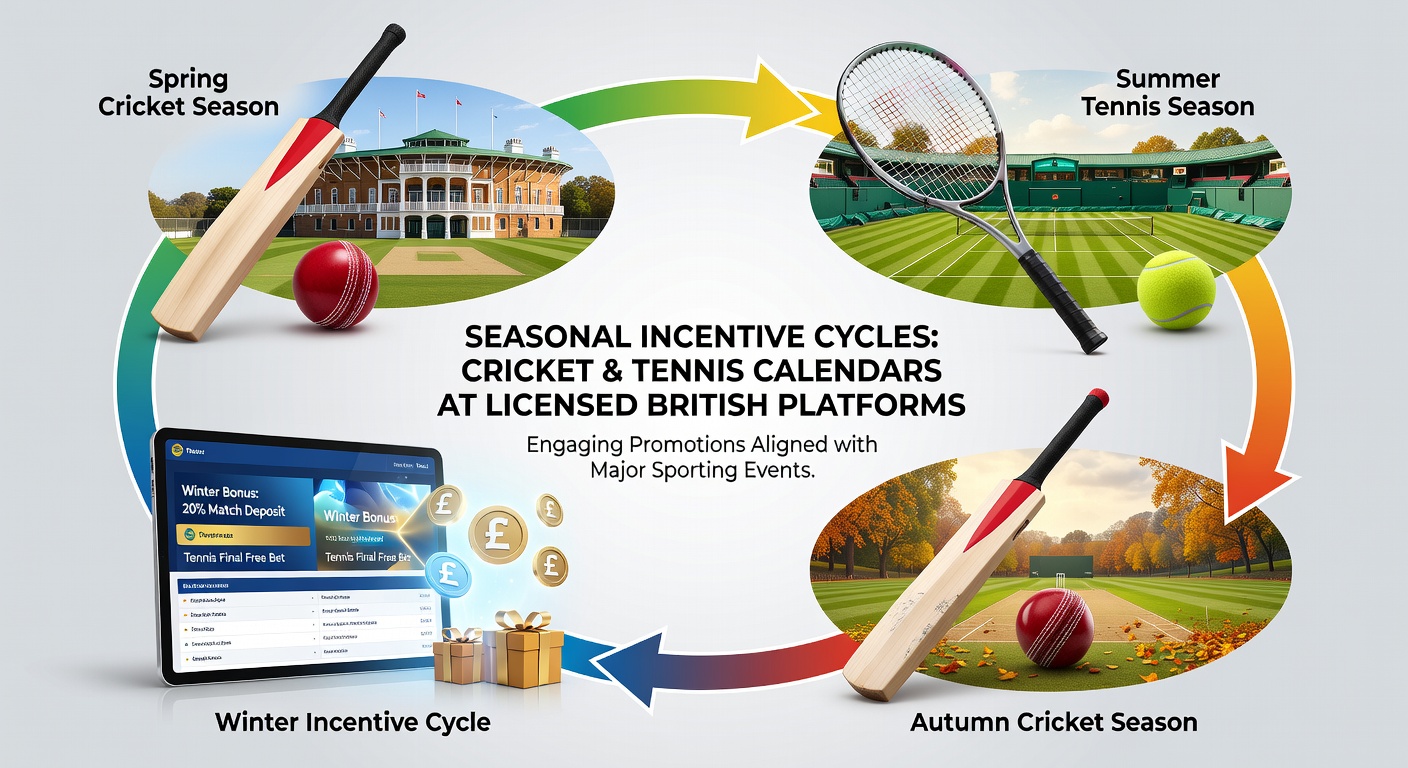
Seasonal incentive cycles at licensed British platforms often mirror the rhythms of international and domestic cricket along with tennis tournaments, creating structured patterns of bonuses, free bets, and odds enhancements that activate during peak periods. Data from industry reports indicate these cycles typically build around flagship events such as the Indian Premier League, the Ashes series, Wimbledon Championships, and the ATP Finals, where platforms adjust promotional calendars to coincide with fixture schedules. Observers note that coordination between sports calendars and marketing departments allows operators to deploy targeted offers without overlapping unrelated promotions, resulting in distinct phases that run from early spring through late autumn.
Cricket Calendar Integration and Platform Responses
Cricket seasons provide extended windows for incentive layering because the sport spans multiple formats and global competitions throughout the year. The Indian Premier League runs from late March into May, prompting platforms to introduce accumulator boosts and cashback structures tied to specific match outcomes during that stretch, while county cricket fixtures in England extend promotional activity into the summer months. Researchers at academic institutions tracking betting trends have documented how operators synchronize no-deposit entry points and enhanced odds with high-profile bilateral series, including the England-Australia Ashes encounters that occur every two years. In May 2026, for instance, overlapping T20 and Test schedules are expected to trigger additional midweek free bet releases at several major sites, following patterns observed in prior cycles. Those who monitor regulatory filings across different jurisdictions report that such alignments help platforms maintain compliance while maximizing engagement during concentrated periods of live action.
Tennis Tournament Cycles and Offer Structuring
Tennis calendars create sharper, more concentrated bursts of activity because Grand Slam events and ATP or WTA tours feature distinct start and end dates that platforms can anticipate months in advance. Wimbledon, held in late June and early July, consistently correlates with increased in-play boost availability and stake-back mechanisms on British-facing sites, whereas the Australian Open in January and the French Open in May-June prompt earlier-season reload bonuses and multi-bet insurance products. Industry organizations such as the American Gaming Association have published comparative analyses showing that European operators mirror these tournament timelines with localized adjustments, often releasing promo codes that activate only during qualifying rounds or specific surface-type matches. Platforms licensed in Britain frequently combine tennis incentives with cricket overlaps when schedules permit, producing hybrid promotions that cover both sports within single calendar weeks.

Operational Patterns Across Licensed Operators
Multiple platforms demonstrate recurring operational sequences where cricket and tennis events dictate the cadence of reward distribution. Early-year activity tends to emphasize Australian Open and IPL-related entry bonuses, followed by a shift toward county cricket and French Open coverage as spring progresses. Summer months bring concentrated Wimbledon and Test match promotions, with autumn transitions focusing on US Open remnants alongside domestic T20 finals. According to figures from the Public Health Agency of Canada on broader gambling behavior studies, seasonal spikes in platform activity align closely with these sporting calendars rather than random marketing pushes. Operators achieve this through centralized planning teams that review fixture releases from governing bodies and adjust backend systems accordingly, ensuring offers appear automatically once events commence.
Regulatory Context and Calendar Awareness
Licensed British platforms operate within frameworks that require clear disclosure of terms tied to specific events, which in turn encourages precise mapping of cricket and tennis schedules. External research from university-led projects in Australia has examined how timing restrictions on promotions influence player behavior across different sports, revealing consistent correlations between major fixtures and offer uptake rates. Platforms therefore maintain internal databases of upcoming tournaments to avoid conflicts with blackout periods or affordability assessment windows, particularly when events such as the 2026 T20 World Cup or additional ATP 1000 series fall near regulatory deadlines. This structured approach allows operators to sustain year-round engagement while respecting the distinct seasonal boundaries of each sport.
Conclusion
Seasonal incentive cycles at licensed British platforms reflect deliberate alignment with cricket and tennis calendars, producing predictable phases of promotional activity that operators refresh annually based on confirmed fixture lists. Patterns documented across multiple seasons show how events such as the IPL, Wimbledon, and various bilateral series serve as anchors for bonus deployment, with May 2026 positioned to continue this established rhythm through overlapping competitions. These cycles remain governed by platform planning processes and external tournament schedules, yielding structured reward frameworks that adapt to the annual sporting timeline without deviation into unrelated areas.