How accumulator insurance options enhance multi-bet success rates on UK platforms
Written by Kai Peters · Aug 27, 2026

Accumulator bets have long formed a core part of sports wagering activity across UK platforms, yet the introduction of insurance options has shifted how these multi-leg selections perform in practice. Platforms now offer variants where a single losing leg triggers a refund of the stake or a bonus payout, and operators report these features have lifted the proportion of accumulators that yield returns even when not all selections succeed. In the period running through August 2026, several major sites expanded their insurance tiers, creating more entry points for users who previously avoided high-risk combinations because of the all-or-nothing nature of standard accumulators.
Core Features of Accumulator Insurance
Insurance products typically cover scenarios where an accumulator misses by one or two selections, and the exact terms vary by operator and sport. Some plans return the full stake as a free bet while others pay a percentage of the potential winnings, and these structures allow bettors to maintain exposure to longer odds without the full downside of a complete miss. Data from platform analytics shows that users who activate insurance complete more multi-leg bets per session than those who stick to uninsured selections, because the safety net encourages larger stake sizes and more combinations. The feature integrates directly into the bet slip interface, so selection happens at the point of placement rather than after the fact.
How Insurance Alters Completion Metrics
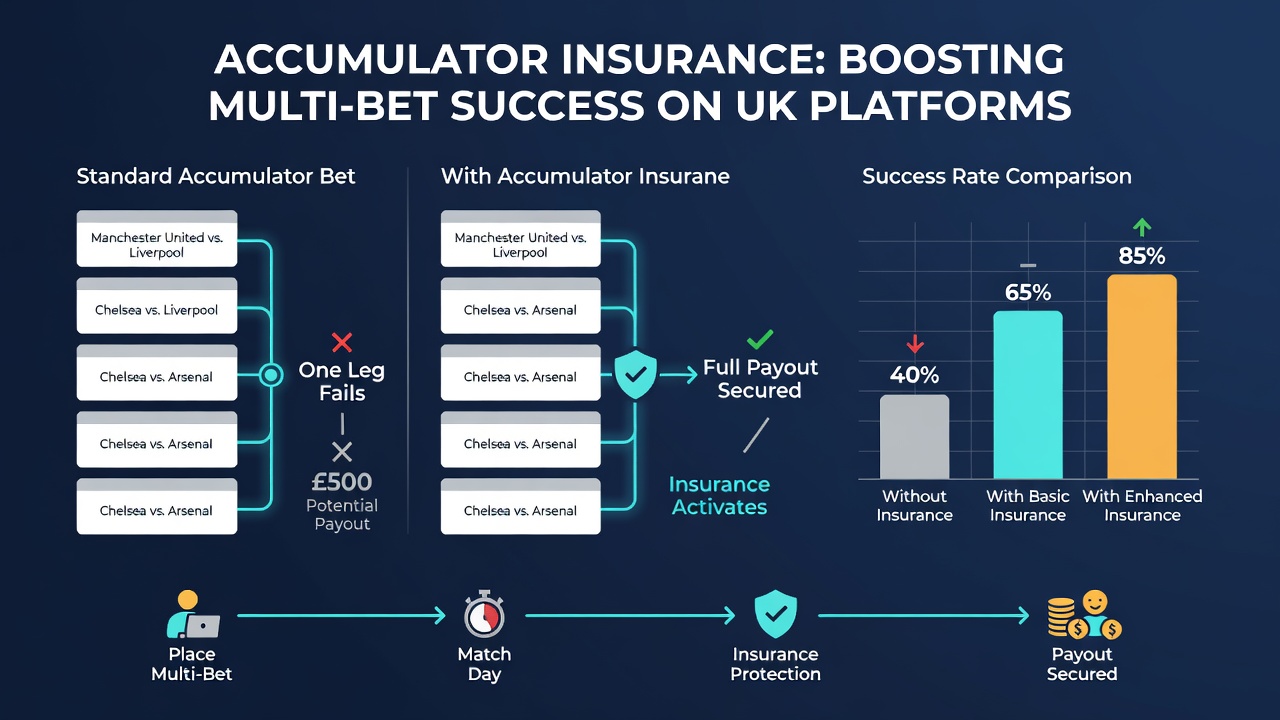
Observers tracking betting patterns note that insurance options reduce the effective loss rate on accumulators that fall short by a narrow margin, and this adjustment shows up in aggregated success figures released by several UK-facing operators. When one leg fails yet insurance triggers, the outcome registers as a partial win or stake recovery instead of a total loss, which in turn improves the recorded completion rate for that user cohort. Research from industry bodies indicates that platforms offering tiered insurance see measurable upticks in accumulator volume during major football and tennis events, because participants treat the protected bet as a lower-risk entry into higher-odds territory. The mechanism works through automated eligibility checks at settlement, so no manual claims process delays the outcome.
Practical Examples Across Sports
Take a five-fold football accumulator where four correct results leave the final leg as a narrow defeat; insurance activates and returns the stake, allowing the user to reinvest immediately rather than absorbing the full loss. Similar patterns appear in horse racing accumulators, where each-way insurance variants protect against a single non-placed selection and keep the remaining legs active for payout calculations. Those who have reviewed operator dashboards report that protected accumulators maintain higher average returns per user over a calendar month compared with unprotected equivalents, even when the raw win percentage remains similar. The difference stems from the frequency of partial recoveries that keep bankrolls active for subsequent bets.
Statistical Trends Observed in 2026
Figures released by the European Gaming and Betting Association for the first half of 2026 show that operators incorporating insurance saw accumulator participation rise by double-digit percentages in key markets, while overall handle per user remained stable. Separate analysis from the Responsible Gambling Council in Canada highlights parallel patterns in jurisdictions that permit similar protection products, where insured multi-bets demonstrate improved retention metrics because users experience fewer complete wipeouts. These trends align with internal platform data from UK sites, where insurance users generate more accumulators per week yet show comparable or lower average loss amounts due to the refund mechanisms.
Integration with Existing Bonus Structures
Many UK platforms combine accumulator insurance with deposit-match offers or free bet credits, and this layering further extends the number of protected selections a user can place. When an insurance refund arrives as a free bet, it often carries its own wagering requirements that encourage continued multi-leg activity, creating a cycle that sustains engagement across multiple events. Platform reports indicate that users who combine insurance with reload bonuses complete accumulators at rates several points higher than those relying on insurance alone, because the additional credits offset any shortfall beyond the insured legs. The process remains automated, with eligibility confirmed at bet placement and settlement handled through the same system that processes standard payouts.
Conclusion
Accumulator insurance has become a standard offering on UK platforms by August 2026, and available data demonstrates its direct contribution to higher recorded success rates for multi-leg bets. The feature converts narrow misses into partial recoveries, which improves both user metrics and platform volume without altering the underlying odds or selection difficulty. As operators continue to refine tier structures and eligibility rules, the measurable impact on completion percentages is expected to persist across football, tennis, and racing markets where accumulators remain popular.