Minimum Stake Requirements and Their Impact on Bonus Conversion Among UK Bettors
Written by Greta Friedrich · Jul 11, 2026
Minimum Stake Requirements and Their Impact on Bonus Conversion Among UK Bettors
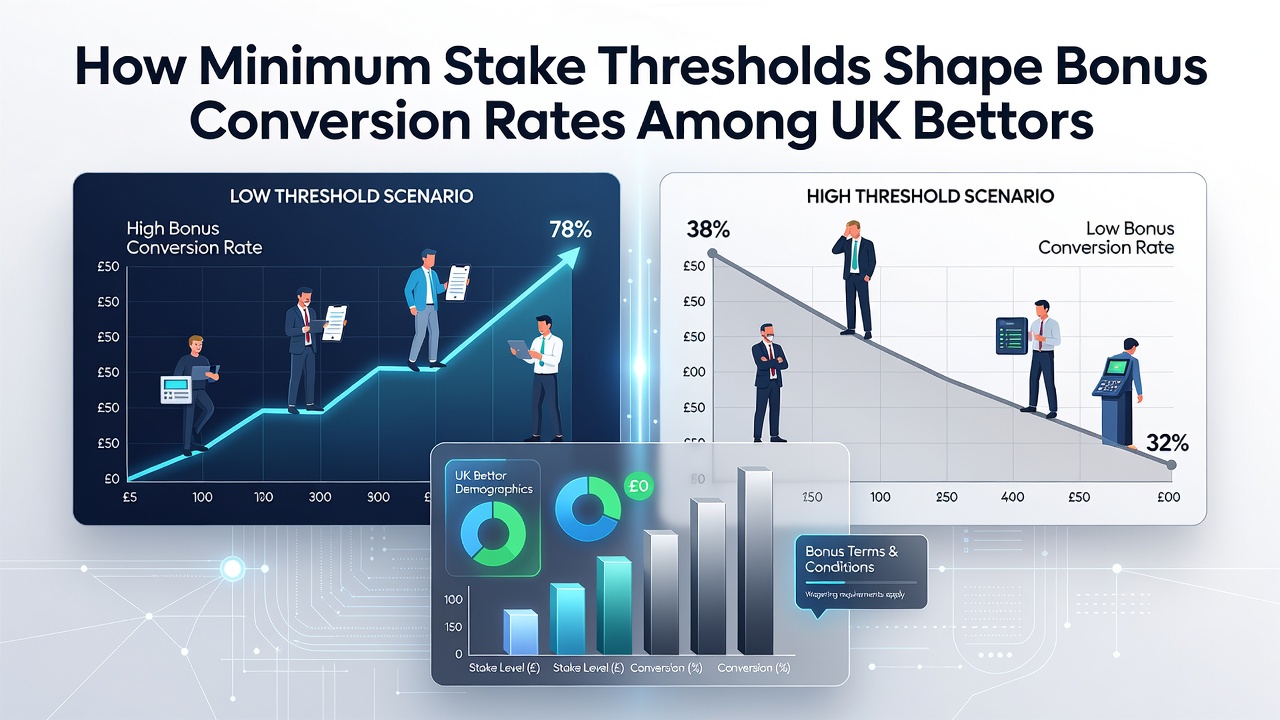
Minimum stake thresholds appear in many UK betting promotions as a condition that determines whether individual wagers count toward wagering requirements for bonus conversion, and these rules shape how bettors approach their play across sportsbooks and casino platforms. Operators set these floors often at levels such as £0.50 or £1 per bet to prevent excessive volume of low-value wagers while still allowing bonus funds to progress toward release, and the thresholds interact directly with conversion rates because bets below the minimum simply do not register against the required total.
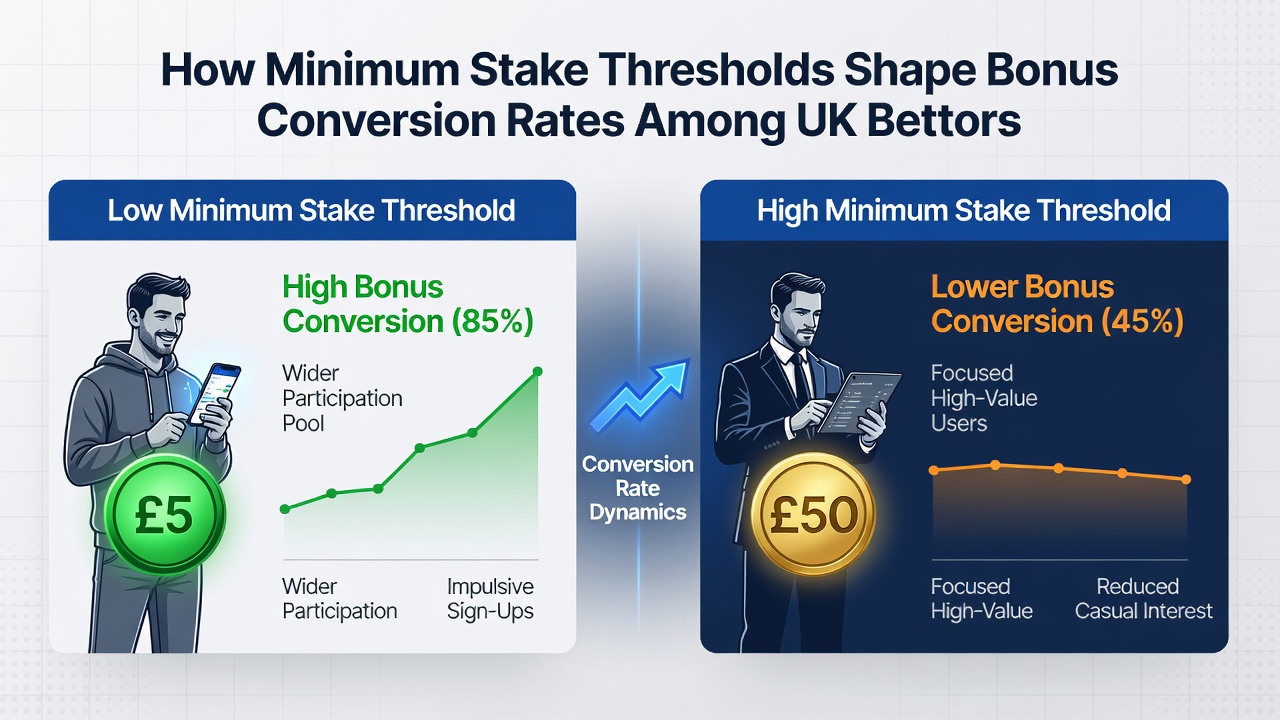
Data from industry tracking services shows that conversion rates drop when thresholds rise above common user betting patterns, particularly among casual participants who favor smaller stakes on accumulators or in-play markets, whereas higher-volume bettors maintain steadier progress provided their average stake exceeds the set limit. Research indicates that sites applying £0.25 minimums see broader participation in bonus offers compared with those enforcing £1 or higher, because the lower bar accommodates a wider range of bankroll sizes and betting styles prevalent in the UK market.
Mechanics of Stake Thresholds in Bonus Terms
Bonus agreements typically specify that each qualifying bet must meet or exceed a stated stake amount before it contributes to the wagering multiplier, which means a £10 bonus with 30x requirements demands £300 in valid stakes yet only counts bets at or above the threshold, and this structure reduces the effective number of wagers needed while filtering out micro-stakes that operators view as administrative burdens. Observers note that many UK platforms align their thresholds with average bet sizes reported in player data, creating a balance between accessibility and operational efficiency, while thresholds that sit too high relative to typical stakes force bettors to adjust their normal patterns or abandon the offer altogether.
Figures reveal that conversion succeeds more frequently when thresholds sit at or below £0.50, since this range matches the stake distribution across football and horse racing markets that dominate UK activity, and bettors who normally place £2 to £5 bets experience minimal disruption to their routines. In contrast, thresholds set at £2 or above correlate with lower completion percentages because they compel users to consolidate smaller bets into larger ones, increasing risk per wager and extending the time required to meet targets.
Patterns Observed Across Bettor Segments
Segmentation data shows distinct responses among different UK bettor groups, with recreational users displaying sharper declines in bonus uptake when thresholds increase because their session volumes consist of numerous low-stake selections that fall short of the minimum, whereas professional or semi-professional participants maintain higher conversion rates by scaling stakes upward from the outset. Studies from academic researchers at institutions in Canada have documented similar dynamics in regulated markets, where minimum stake rules influence both participation depth and overall bonus clearance timelines without altering the underlying wagering multiplier itself.
One study revealed that bettors who encounter mismatched thresholds often shift to alternative promotions or platforms rather than modify established habits, resulting in measurable migration patterns tracked through affiliate referral data during the first half of 2026. And platforms that lowered thresholds in response to these trends recorded improved retention metrics for bonus-related play, demonstrating the direct link between the rule and user behavior.
Industry Adjustments Through Mid-2026
By July 2026 several operators had recalibrated minimum stake levels across their welcome and reload offers to reflect updated player analytics, with some introducing tiered thresholds that scale according to bonus size or game type, and these modifications produced measurable lifts in conversion percentages among previously under-served segments. Industry organizations such as the European Gaming and Betting Association have compiled comparative reports across multiple jurisdictions that highlight how threshold calibration affects both player satisfaction metrics and operator revenue from converted bonuses.
What's interesting is that the adjustments coincided with broader platform updates aimed at mobile users, where stake entry interfaces now display real-time eligibility indicators so bettors see immediately whether a planned wager will count, and this transparency has reduced instances of wasted stakes that previously failed to register. Data shows conversion timelines shortened by an average of two to three days on platforms that implemented clearer threshold communication alongside the actual stake changes.
Comparative Data from Other Regulated Markets
Reports issued by the Nevada Gaming Control Board illustrate parallel effects in sports betting environments where minimum stake rules for promotional play influence clearance rates, and the findings align closely with patterns observed among UK users despite differences in product focus and regulatory frameworks. Bettors in both regions demonstrate higher success when thresholds remain proportional to typical wager sizes, while disproportionate increases lead to reduced engagement without corresponding gains in operator objectives.
Academic analyses further confirm that the interaction between stake minimums and conversion operates through straightforward arithmetic rather than behavioral psychology alone, because each non-qualifying bet simply extends the remaining requirement without advancing progress, and this mechanical reality produces predictable outcomes across diverse user cohorts when threshold levels change.
Conclusion
Minimum stake thresholds function as a core variable within UK bonus structures that directly determines the pace and probability of conversion for participating bettors, and evidence from multiple markets demonstrates consistent relationships between threshold height, user segment response, and overall clearance statistics. Operators continue to refine these parameters in line with aggregated player data, producing ongoing adjustments that affect how promotional offers perform across the sector. Those who monitor threshold policies alongside conversion metrics gain clearer insight into the operational dynamics shaping bonus utilization in the current environment.