Regional Loyalty Programs Reshape Betting Habits in Britain's Provincial Areas
Written by Kai Peters · Jul 23, 2026
Regional Loyalty Programs Reshape Betting Habits in Britain's Provincial Areas
Data from industry trackers shows that tiered cashback systems have gained traction in non-metro betting markets across Britain since early 2025, with operators structuring rewards around repeat play to maintain engagement outside major cities. These programs divide participants into levels based on activity volume, where higher tiers unlock larger cashback percentages on losses or wagers placed over set periods. Observers note that this approach differs from flat promotions because it encourages sustained participation rather than one-time signups, particularly in areas where betting shops and local apps serve as primary access points.
How Tier Structures Operate in Practice
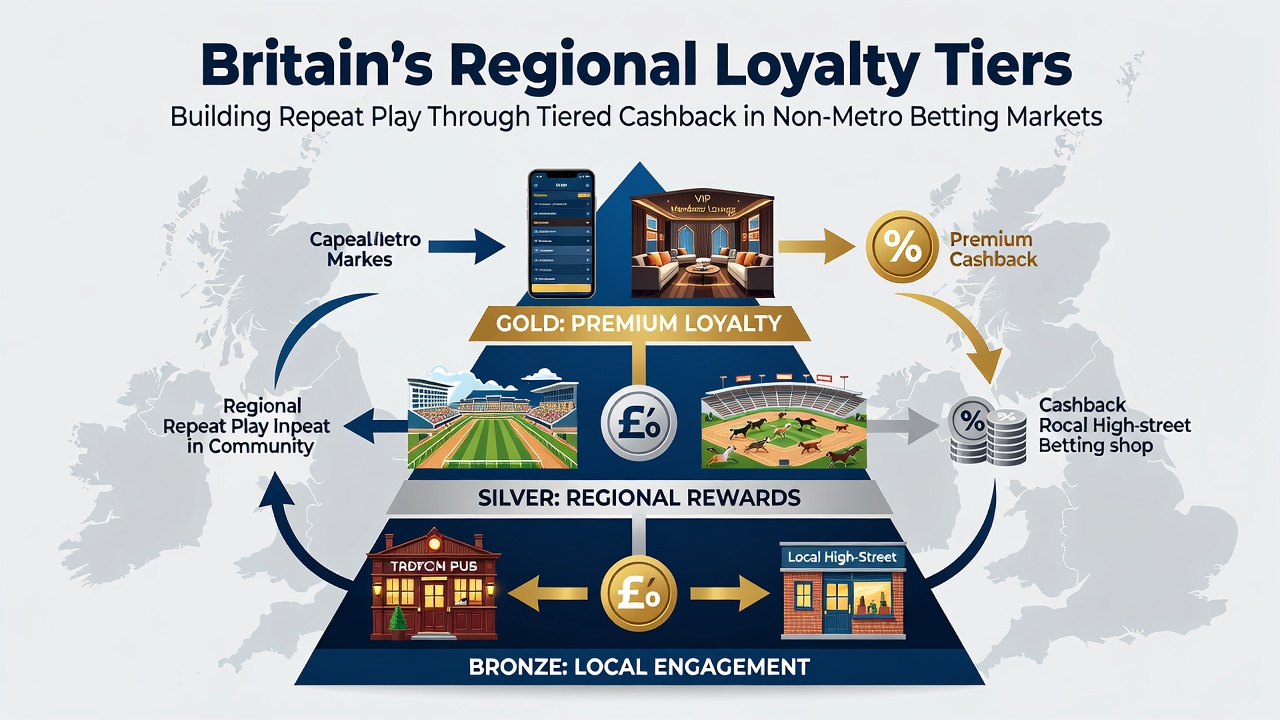
Operators typically define tiers through cumulative spend thresholds, such as bronze for modest weekly activity, silver after consistent monthly totals, and gold or platinum for those exceeding quarterly benchmarks. Cashback rates climb accordingly, often starting at 5 percent for entry levels and reaching 15 to 25 percent at the top, with funds returned as playable credits or direct account deposits. Research indicates these mechanics help stabilize revenue in regional markets where seasonal fluctuations affect footfall, and participants move between tiers based on rolling 30 or 90 day windows rather than lifetime totals.
Take one operator active in northern England counties who adjusted their silver tier requirement downward in spring 2026 to accommodate smaller bettors. That adjustment coincided with a measurable uptick in weekly active users according to internal metrics shared with trade publications. Similar patterns appear in Welsh border towns and Scottish highlands, where lower population density makes volume harder to sustain without loyalty incentives.
Regional Variations and Market Response
Non-metro markets present distinct challenges compared with London or Manchester hubs because travel distances limit casual visits and local economies influence disposable income. Tiered cashback addresses this by rewarding frequency over stake size, allowing smaller regional players to reach mid-level benefits without matching urban high-roller volumes. Figures from European gaming associations reveal that provinces with established programs saw participation rates hold steadier through mid-2026 than comparable areas without structured rewards.
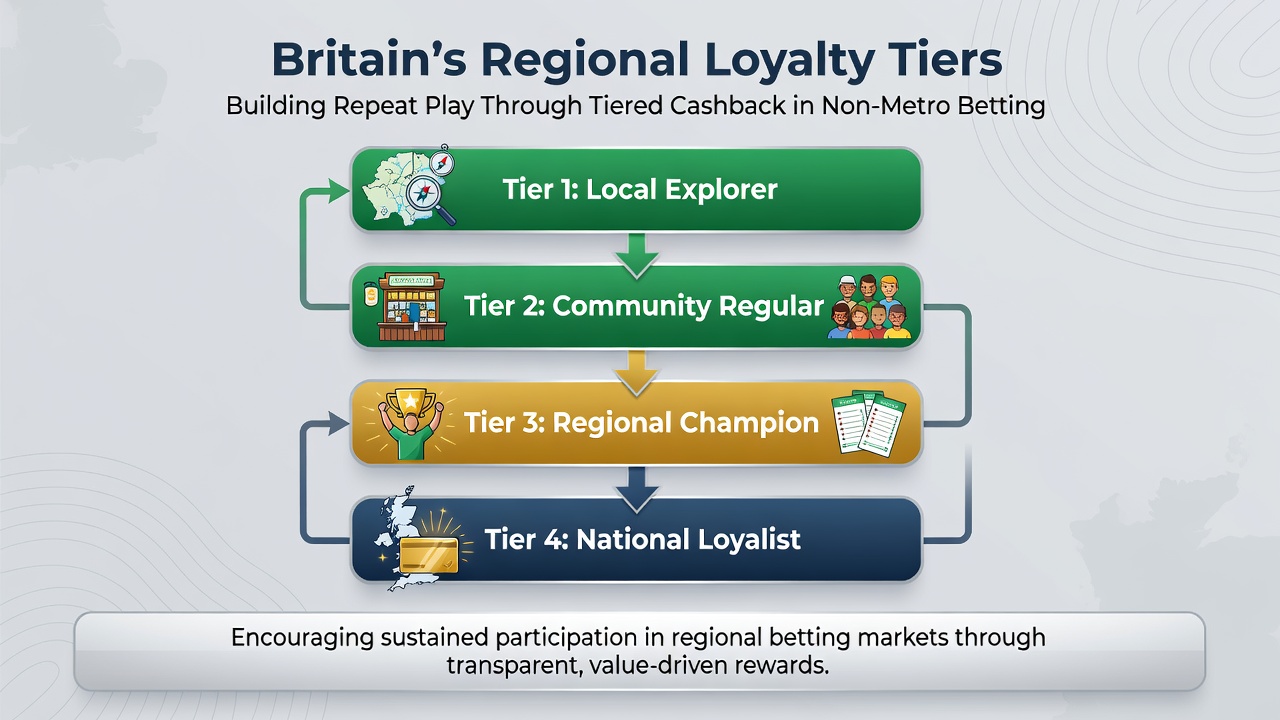
July 2026 data releases highlighted growth in these regional segments even as overall sports betting volumes faced headwinds. Cashback tiers contributed by converting occasional punters into regular users who monitor progress toward the next reward bracket. Industry reports note that digital tracking apps now send tier status updates weekly, which keeps participants informed without requiring store visits. This digital layer proves especially useful in rural zones where mobile data coverage has improved steadily since 2024.
Comparison With International Loyalty Models
British regional programs share structural similarities with systems observed in other jurisdictions. A Canadian federal review documented how tiered rewards in provincial lotteries maintained steady engagement across smaller communities despite economic pressures. Likewise, an Australian government study on remote wagering found that cashback escalators reduced churn among non-urban account holders by aligning rewards with local spending patterns rather than national averages.
Those international examples demonstrate that tier progression encourages repeat sessions because users see tangible progress toward higher returns. British operators have adapted the model by incorporating location-specific bonuses, such as extra cashback during regional football fixtures or horse racing meets that draw local crowds. Data shows these targeted boosts further segment activity without overlapping with metro-centric campaigns.
Implementation Challenges and Adjustments
Setting accurate tier thresholds requires balancing accessibility with profitability, since overly generous top rates can erode margins while stingy lower levels fail to retain casual users. Operators in Britain's mid-sized towns have experimented with hybrid models that blend cashback with free bet credits at certain milestones, creating multiple pathways to value. External audits conducted through 2026 confirmed that transparent rules around tier resets and qualifying wagers correlate with higher long-term retention across tested regions.
Yet the reality is that smaller operators sometimes lack the analytics infrastructure larger national brands possess, leading some to partner with third-party loyalty platforms. These partnerships allow regional sites to offer competitive tiers without building custom systems from scratch. Participation metrics released in mid-2026 indicated that partnered programs achieved comparable uplift to in-house versions, suggesting scalability beyond major chains.
Conclusion
Tiered cashback continues to expand within Britain's non-metro betting markets as operators refine thresholds and communication methods to match local conditions. Evidence from multiple regions points to sustained user activity where progression mechanics remain clear and attainable. As July 2026 figures illustrate ongoing adaptation, the structure provides one mechanism for maintaining engagement where population and spending patterns differ from urban centers.